


Subscribe To Myerla

 Posts
All Comments
Wednesday, 11 November 2020
Out of Africa

Wednesday, 30 September 2020
Tenet

Christopher Nolan’s Tenet is the only really big movie to soldier through the pandemic and be released in cinemas during the most lucrative time of the year. Others like Black Widow, No Time to Die and Mulan all were either pulled back to later in the year or released on a streaming service. Rightly or wrongly, Tenet went ahead with its release with many cinema chains banking on Nolan being so in demand people (some) will go out to their trip first cinema in half a year.
Saturday, 4 July 2020
Selah and the Spades

At Haldwell Boarding School there are five factions. Each faction
plays a role within the school, for example the Prefect faction makes
sure the teachers aren’t aware of the students’ partying. The main
faction are the Spades, led by Selah (a superb Lovie Simone), and their
main role is to supply everyone with the fun stuff (drugs and alcohol).
Selah is in her final year and is looking for a successor to lead the
Spades. The search is a tough one, but when Paloma (Celeste O'Connor)
joins the school, Selah strikes up a friendship thinking she has found
her successor.
Artemis Fowl
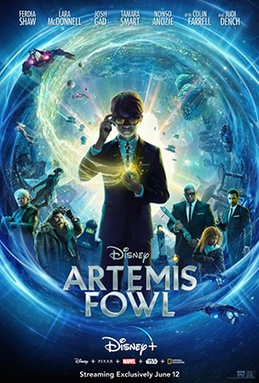
One of the many affects of the COVID-19 pandemic was an increase in
the number of movies, that would have had a cinema release, which went
straight to VOD or had a shorter run in the cinemas. Artemis Fowl is one
those movies that skipped the cinema and went straight to Disney’s
streaming service. It was probably for the best as it has all the
makings of a box office disaster for more reasons than simply being
really bad. Simply being good wouldn't have saved the film as it’s part
of the genre (young adult fiction) that has decreased in popularity
since the Hunger Games and Twilights days, and it’s start of a franchise
rather than being one that’s already established in the movie industry
(plus this has been in development hell since the early 2000s).
The Invisible Man

After the lukewarm reception, both critically and financially, to The
Mummy, Universal’s idea for a Dark Universe based on their horror
characters of the past was put on hold before it had even begun. This
included The Invisible Man in which Johnny Depp was tipped to star.
However, this version of the story was left on the wayside and was
picked up by Blumhouse Productions who hired Leigh Whannell to direct
and rewrite the story.
Never Rarely Sometimes Always

When I lived in Ealing, I used to live near an abortion clinic which
found itself in the news frequently. It was often a site for
anti-abortion protestors to sit outside and harass women going in
making, I imagine, an incredibly difficult decision in difficult
circumstances. The circumstances of each woman are going to be different
woman to woman and whilst there is now a buffer zone in place the
presence of those protestors mirrors a later scene in Eliza Hittman’s
Never Rarely Sometimes Always.
Da Five Bloods

Subscribe to:
Posts (Atom)